
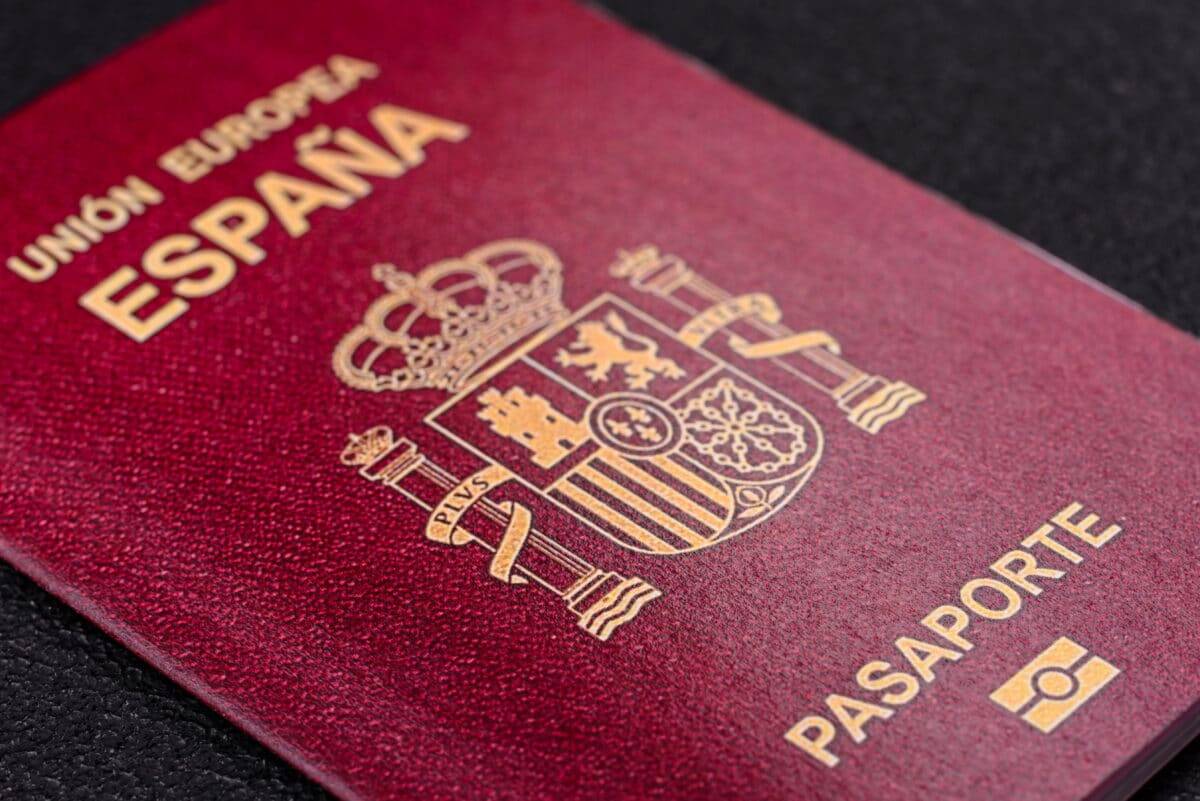
Spanish citizenship is not something you apply for when you arrive. It is the end of a period of legal residence in Spain: ten years for most nationalities, two for Latin Americans and a few other groups, one year for spouses of Spanish citizens. Everything else, from the language exam to the oath, comes after those years have been completed.
This guide sets out the routes, the requirements, the documents and the realistic timeline, based on the Spanish Civil Code (article 22) and the nationality regulations applied by the Ministry of Justice. If you have not yet secured legal residence, start with the routes that lead there: the Highly Qualified Professional visa, the Digital Nomad Visa or the other options described in our guide to moving to Spain from the UK.
Residence permit vs. citizenship
| Residence permit (TIE) | Spanish citizenship | |
|---|---|---|
| Nature | Authorisation to live in Spain, temporary or long-term | Full membership of the Spanish state |
| Renewal | Yes (temporary permits); long-term permit renewed as a card every 5 years | Never expires |
| Passport | No. You keep your own passport | Spanish and EU passport, free movement and work in all EU countries |
| Vote | No (except municipal elections for some nationalities) | Yes, all elections |
| Loss | Can be lost through prolonged absence | Only in exceptional cases |
Legal residence is the foundation. Citizenship by residence is only available to people who have held a residence authorisation, not a tourist stay and, as a rule, not a student stay.
The residence periods: 10, 5, 2 or 1 year
Article 22 of the Civil Code sets the period of legal, continuous residence immediately before the application:
| Period | Who |
|---|---|
| 10 years | General rule. Applies to US, UK, Canadian, Australian, Chinese, Indian and most other nationals. |
| 5 years | People who have been granted refugee status in Spain. |
| 2 years | Nationals by origin of Ibero-American countries, Andorra, the Philippines, Equatorial Guinea and Portugal, and people of Sephardic origin. |
| 1 year | Born in Spanish territory; married to a Spanish citizen for at least one year and not legally or de facto separated; widow or widower of a Spanish citizen; born outside Spain to a parent or grandparent who was originally Spanish; people who did not exercise the right to opt for Spanish nationality in time; people under the guardianship of a Spanish citizen or institution for two consecutive years. |
Three conditions apply to every period:
- Legal. You must have held a valid residence authorisation for the whole period. Time spent as a tourist does not count. Time on a student stay (estancia por estudios) does not count towards nationality either, although since the 2025 immigration regulation it counts at 50% towards long-term residence. We explain the difference in Does a student visa count towards residency in Spain?
- Continuous. The period must not be interrupted. The law does not fix a maximum number of days abroad, but long absences, especially of several months in one year, can break continuity. Keep trips short and keep evidence of your life in Spain (employment, lease, children’s schooling, tax returns).
- Immediately before the application. You must still be a legal resident when you apply and while the file is processed.
Who applies through marriage or descent
Marriage to a Spanish citizen reduces the period to one year, but the year only starts once the marriage is registered in the Spanish Civil Registry. A marriage celebrated abroad must be registered at the consulate or in Spain before it counts. You must also be living together in Spain during that year.
Children of a Spanish parent usually do not need residence at all. If your mother or father was Spanish when you were born, you are Spanish by origin and simply need to register the birth. If the parent acquired Spanish nationality later, or you were born outside Spain to Spanish-born parents or grandparents, you may be able to opt for nationality within the deadlines set by the Civil Code, or apply after one year of residence.
Grandchildren and descendants of exiles: the Democratic Memory Law (Ley 20/2022) opened a special window for descendants of Spaniards who lost their nationality through exile. That window closed in October 2025. Descendants who did not apply in time are now back to the general rules above.
Requirements common to every applicant
- Legal residence for the required period, as explained.
- Good civic conduct. Criminal record certificates from Spain and from every country where you have lived in the last five years, legalised or apostilled and translated. Minor offences can lead to refusal.
- Integration into Spanish society, proven through two exams run by the Instituto Cervantes:
- CCSE (constitutional and sociocultural knowledge): 25 multiple-choice questions on the Constitution, institutions, geography and culture. The question bank is published in advance.
- DELE A2 or a higher Spanish language diploma. Nationals of countries where Spanish is an official language are exempt from the DELE. Applicants who completed compulsory secondary education in Spain, people with reading and writing difficulties and minors have full or partial exemptions.
- Age: applicants must be over 18, or over 14 with parental assistance. Parents apply on behalf of younger children.
Documents
The standard file for citizenship by residence includes:
- Application form and payment of the fee (around €100, updated each year).
- Valid passport and Spanish residence card (TIE) for the whole period, including previous cards.
- Birth certificate from your country of origin, legalised or apostilled, with sworn translation.
- Criminal record certificates from your country of origin and any country of residence in the last five years, and from Spain.
- Certificate of registration at the town hall (padrón) showing your address history.
- CCSE and DELE certificates or proof of exemption.
- Proof of means of subsistence: employment contracts, tax returns, self-employment registration or pension income.
- For the one-year marriage route: Spanish marriage certificate from the Civil Registry, spouse’s Spanish ID and padrón showing shared address.
Foreign documents have a limited validity once issued, so order them in the right sequence: criminal records and birth certificates last, once the rest of the file is ready.
How to apply, step by step
- Check your period and continuity. Count from the date of your first residence card, not from your arrival or your NIE.
- Pass the CCSE and, if required, the DELE A2. Exams are held several times a year; book early because places in large cities fill up.
- Gather and legalise the documents. Apostille for Hague Convention countries, consular legalisation for the rest; sworn translation into Spanish.
- Submit the application online through the Ministry of Justice electronic platform. Online filing has been the standard route since 2016 and is faster than filing on paper at the Civil Registry. A lawyer or authorised representative can file on your behalf.
- Wait for the decision. The legal deadline is one year; in practice, files resolved by the Ministry of Justice take between one and two years depending on the backlog. If there is no answer after a year, the application is deemed refused by administrative silence, which opens the way to an appeal.
- Oath and registration. Once approved, you have 180 days to attend the Civil Registry, swear or promise loyalty to the King and obedience to the Constitution, and, where required, renounce your previous nationality. Your Spanish nationality is registered on that day.
- DNI and passport. With the registration certificate you can apply for your Spanish ID card and passport at the National Police.
Dual nationality
Spain does not allow dual nationality as a general rule. Adults acquiring citizenship by residence must declare that they renounce their previous nationality, except nationals of Ibero-American countries, Andorra, the Philippines, Equatorial Guinea, Portugal and, since 2022, France, who keep both.
For citizens of the United States, the United Kingdom, Germany and most other countries, the renunciation is a declaration made before the Spanish Civil Registry. Whether that declaration causes the loss of your original nationality depends on the law of that country, not on Spanish law. Take advice in your country of origin before the oath if keeping your original passport matters to you.
Realistic timeline
| Profile | Route to residence | Years of residence | Total time to passport (approx.) |
|---|---|---|---|
| US executive relocated by a company | Highly Qualified Professional permit, then long-term residence | 10 | 11 to 12 years |
| British remote worker | Digital Nomad Visa, renewed, then long-term residence | 10 | 11 to 12 years |
| Argentine or Colombian professional | Any residence permit | 2 | 3 to 4 years |
| Spouse of a Spanish citizen | Family member of an EU citizen card | 1 | 2 to 3 years |
During those years you will be a Spanish tax resident. If you relocate for work, check whether you qualify for the special expatriate tax regime before you arrive, using our Beckham Law calculator: the option must be exercised in the first months and it changes the tax cost of the whole period.
Frequently asked questions
Does time on a student visa count? Not for nationality. Student stays count at 50% towards long-term residence under the 2025 regulation, but the nationality period starts with your first residence authorisation.
Can I apply from abroad? No. Citizenship by residence requires you to be legally resident in Spain at the time of the application and during processing.
How long can I spend outside Spain during the period? There is no fixed limit in the law. Short trips are not a problem. Absences of several months, or living abroad while keeping a Spanish card, break continuity and lead to refusal.
Can my children apply with me? Minor children who are legal residents can apply through their parents and benefit from the same period. Children born in Spain to foreign parents can apply after one year of legal residence.
What happens if the application is refused? Refusals can be appealed before the Ministry of Justice and then before the administrative courts. Common reasons are absences, criminal records and missing or expired documents, so most refusals are avoidable with a properly prepared file.
Talk to us before you count your years
Most problems in citizenship files begin years earlier: a residence permit that was not renewed on time, a student stay that was expected to count, a marriage never registered in Spain, a long absence for work. Spain Global Hub coordinates the immigration lawyers who review your history, confirm which period applies and prepare the file so that it is decided once.